Currently, this swimming lesson is offered only in Spanish, but in the future they will also be available in English.
By Tomás Hernández, Senior Swimming Coach
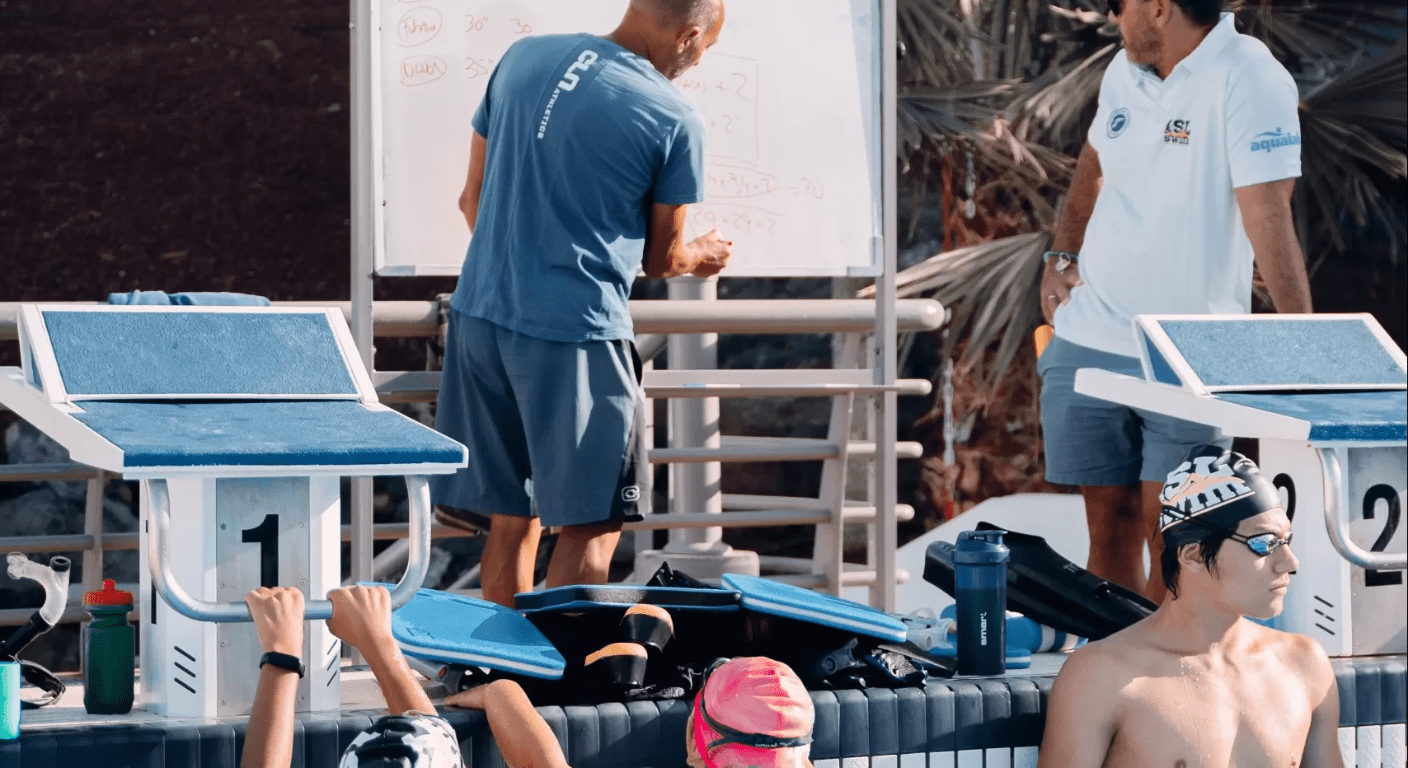
At Tenerife Training, we are once again offering our small-group technical training sessions, a format designed for athletes who need specific reinforcement or a more detailed explanation of concrete aspects of their technique. This format allows us to work more deeply on elements of each stroke, such as starts, turns, and underwater phases.
A methodology based on neuroscience
Our methodology is grounded in the most recent advances in neuroscience applied to sports. The objective is to constantly adapt the exercises to the technical issues each athlete presents, seeking solutions through variability and the appropriate progression of tasks. Each exercise is conceived as a piece within a broader process that helps the athlete understand the technical concept we are working on.
For example, if we detect an issue in body position during freestyle, we select specific exercises that allow the athlete to understand and feel the correct position. These exercises may be progressive, regressive, or combined, but always oriented toward the same technical goal.
Small groups for effective attention
Training takes place in groups of up to six people. This format allows us to provide personalized attention without the excessive fatigue that a long individual session would cause. In sessions lasting up to two hours, the nervous system needs breaks to assimilate information, so group dynamics help support both proper rest and learning.
In addition, athletes learn a great deal through imitation. Seeing a teammate correct a mistake helps others identify and better understand their own errors.
Synchrony between theory and practice
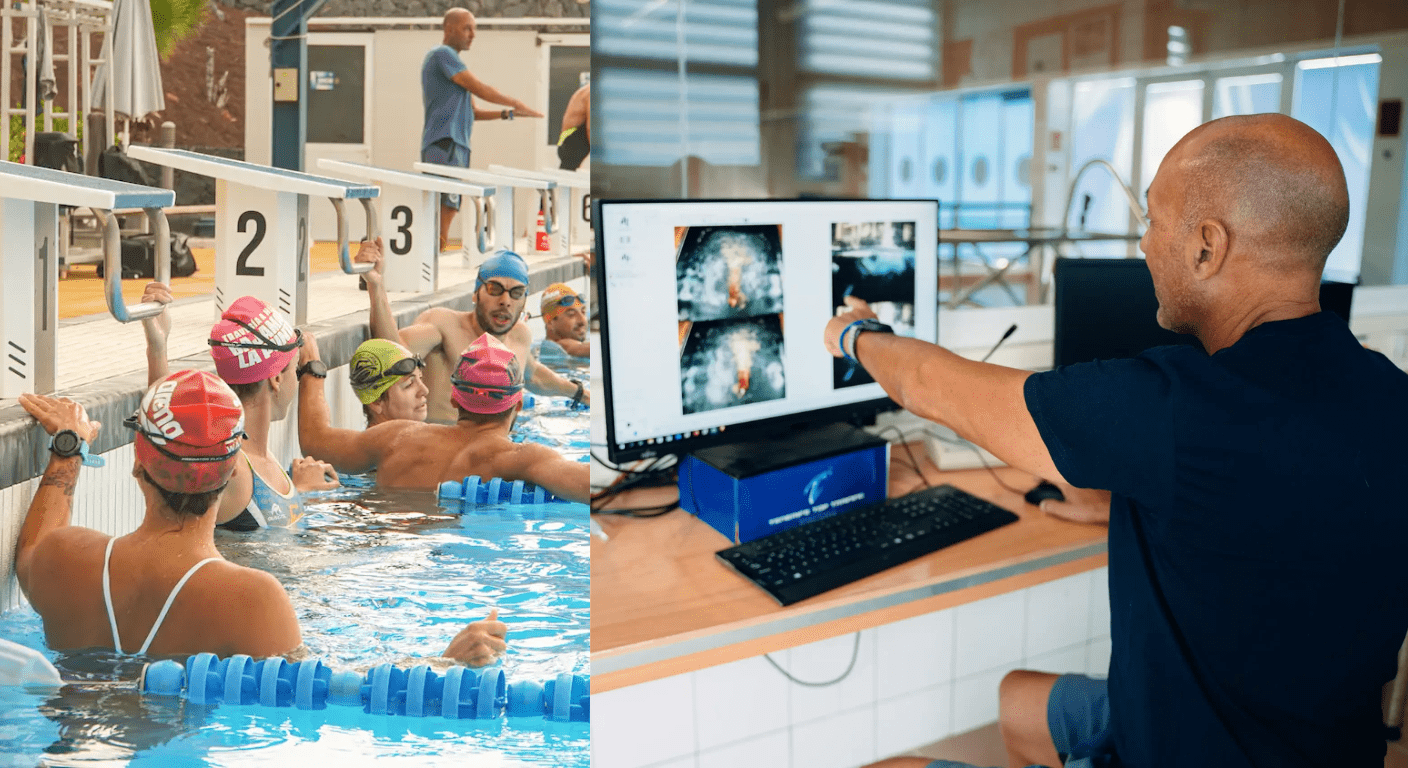
Each session combines a brief theoretical component with immediate practice in the water. Our aim is not to swim large volumes, but to understand the movement so that it can be correctly transferred to the athlete’s usual club training. What matters is that the athlete understands what they are doing and how to apply it to full-stroke swimming.
Technical variability is essential: technique is a process, not a fixed state. As the athlete grows, gains strength, and changes physically, they need to adapt their technique, and these periodic sessions make those adjustments possible in a progressive way.
Technology to improve proprioception
Swimming is a sport of sensations, and athletes cannot see themselves while they swim. To improve proprioception, we use external cameras and a hydrodynamic flume that allow real-time visualization and analysis of technique. This helps correct misperceptions and visually understand what needs to be changed in the movement.
Criteria for organizing groups
Groups are organized to ensure similar levels. Any competitive swimmer can participate, and if necessary, we can conduct a short assessment to determine the most suitable group for each athlete. The goal is for all participants to progress at the same pace and work on similar content.
Athletes who attend the small groups
We typically see a variety of athlete profiles. Some attend occasionally to prepare for a specific goal, such as qualifying times or particular improvements. Although it is possible to work this way, we recommend coming with enough time in advance. If the athlete arrives too close to competition, it may lead to “paralysis by analysis”: overthinking technical corrections during the race, which negatively affects performance.
Ideally, athletes should attend regularly, allowing them to integrate the changes into their usual training and automate them before competition.
Versatility through technical work
Many swimmers arrive highly specialized in one stroke, while other strokes are underdeveloped due to lack of training volume. This limits their evolution and narrows their opportunities within the team. Working specifically on these less-developed strokes helps balance performance, improve overall technique, and prepare athletes for individual medley events or relays.
Swimming, after all, requires consistency and continuous adaptation. To evaluate real progress, it is sometimes useful to work on other strokes or distances to assess development without the psychological pressure of the “time” in the athlete’s main event.
Conclusion
Tenerife Training’s small-group sessions are an effective tool to help athletes understand their technique, adapt it to their needs, and integrate it solidly into their daily training. Thanks to neuroscience, technology, and a personalized methodology, each swimmer can address their weaknesses, improve their performance, and broaden their opportunities within the sport.